Find your starting point
Name one concern and one value. Notice when the concern shows up, and try one agreed action twice before your next session.
Review:What happened? What helped or got in the way?
The 90-Day Experience
Two 2.5-hour in-person MOVE sessions each month, optional off-week check-ins, and a plan we review together. Your pace and goals shape the work.
Small steps, clear reviews
You and your therapist choose a few realistic actions, decide how to notice change, and adjust together. These are examples to discuss—not assignments or promised outcomes.
Name one concern and one value. Notice when the concern shows up, and try one agreed action twice before your next session.
Review:What happened? What helped or got in the way?
Choose a manageable routine, such as a brief reflection three days a week. Bring an example of using it in everyday life.
Review:Compare your starting point, current experience, and goals. Adjust the practice.
Practice a chosen skill in two relevant situations, such as setting a boundary or responding differently to a setback.
Review:What is becoming easier? What still needs support?
Identify practices worth keeping, signs you may need more support, and a realistic next step with your therapist.
Review:Consider continued care, a revised plan, or other resources based on your needs.
Open a topic below to see how a broad hope can become a specific starting goal.
“I want to feel less overwhelmed.”
A possible short-term goal: For the next two weeks, notice three situations where stress rises and try one coping response agreed with your therapist.
How we review it: Discuss what you noticed before and after, and whether the response was useful.
“I want somewhere to make room for this loss.”
A possible short-term goal: Before the next session, choose one way to express or acknowledge your loss, if it feels right, and identify one source of support.
How we review it: Talk about what felt supportive or difficult. Grief does not have a deadline.
“I want to be less harsh with myself.”
A possible short-term goal: Notice two moments of self-criticism and explore a more balanced response with your therapist. Choose one action connected to a value beyond appearance.
How we review it: Discuss whether that action reflected what matters to you; no weight or appearance target is required.
“The news is affecting my day.”
A possible short-term goal: Agree on a manageable news-checking boundary for one week and choose one restorative or values-based activity.
How we review it: Review how the boundary affected attention, relationships, and daily routines.
“I want to communicate what I need.”
A possible short-term goal: Draft one clear statement of a need or boundary and rehearse it in session before deciding whether and how to use it.
How we review it: Explore comfort, context, and what happened. The goal is a workable next step, not a perfect conversation.
Your individual plan is created during care. Nothing you open here is submitted as a clinical assessment or stored as a personal goal.
Discuss your starting goal
The method in practice
Two 2.5-hour in-person sessions each month, optional off-week check-ins, ongoing progress monitoring, and regular reviews create a steady rhythm.
Discuss what you are navigating, what you want to change, program expectations, clinical fit, schedule, and readiness. If we determine MOVE is an appropriate fit, we will plan enrollment and booking together.
Clarify goals, complete initial measures, review consent and outdoor-session expectations, identify values, and build a personalized 90-day plan.
Meet on Sundays for individual counseling, guided movement, observation of patterns, values-based reflection, skills practice, and planning for the next two weeks.
Use the optional check-in to review what happened, reinforce progress, identify barriers, and adjust the next committed action without waiting for the next in-person session.
Track relevant measures, reflections, sleep, movement, stress, and action steps. Your therapist reviews trends with you so the plan stays responsive—not rigid.
Pause for a formal review: what is changing, what still feels stuck, which skills are transferring, and what should be strengthened during the next phase.
Review outcomes, name the practices worth keeping, create a continuation plan, and determine whether follow-up care, maintenance support, or another resource is appropriate.
Stay connected through alumni gatherings, group experiences, and other community-building events as they become available.
Built-in reviews
The MOVE app brings check-ins, values-based actions, progress measures, reflections, and upcoming sessions into one private experience.
Your therapist will guide you through client access during onboarding. App access is separate from this public website.
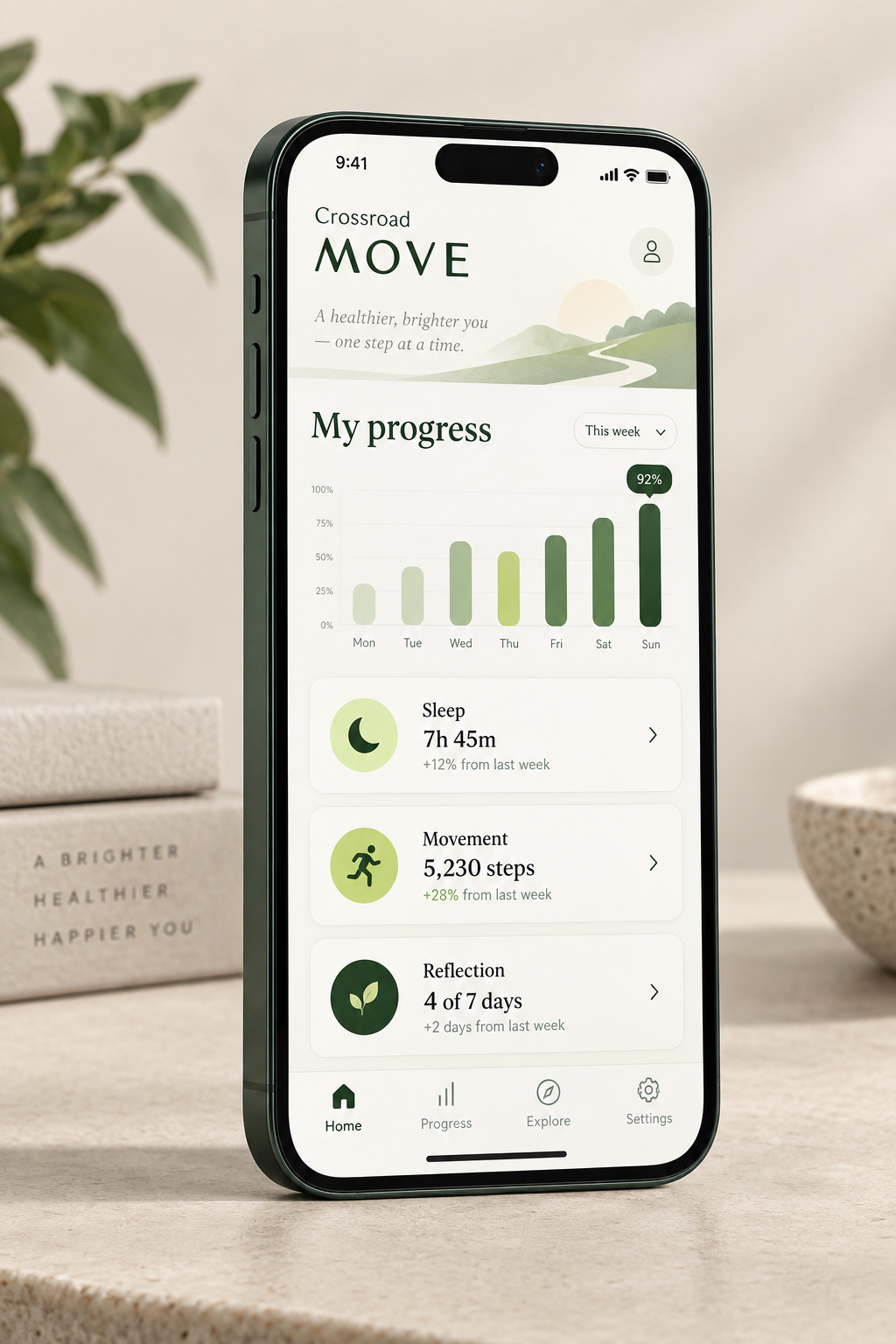
Illustrative app visualization with sample content; the live interface may differ.